Crossing the Blues
Showing posts with label Cartoon. Show all posts

Rainbow Cartoon Funny Animated


Rainbow Cartoon Funny Animated
A rainbow is an optical and meteorological phenomenon that causes a spectrum of light to appear in the sky when the Sun shines on to droplets of moisture in the Earth's atmosphere. It takes the form of a multicoloured arc. A rainbow spans a continuous spectrum of colours; the distinct bands (including the number of bands) are an artifact of human colour vision, and no banding of any type is seen in a black-and-white photo of a rainbow.

he light is first refracted entering the surface of the raindrop, reflected off the back of the drop, and again refracted as it leaves the drop. Contrary to popular belief, the light at the back of the raindrop does not undergo total internal reflection, and some light does emerge from the back. However, light coming out the back of the raindrop does not create a rainbow between the observer and the Sun because spectra emitted from the back of the raindrop do not have a maximum of intensity, as the other visible rainbows do.
Youda Fairy Cartoon Funny Animated


Youda Fairy Cartoon Funny Animated
Together with your old friends from your favorite cartoons you will find yourself in a fairy tale. Cartoon Character Screensaver will help you to. is an Animated Wallpaper by EleFun Multimedia devoted to the nature theme. How do you think why exactly this lake seems so calm. The wise old forest wizard has provided a watchful eye over the kingdom for over 1000 years. Together with his fairies he has been protecting.


Digimon Adventures Art Cartoon Funny


Digimon, short for "Digital Monsters", is a Japanese media franchise encompassing anime, manga, toys, video games, trading card games and other media. The franchise's eponymous creatures are monsters of various forms living in a "Digital World", a parallel universe that originated from Earth's various communication networks. On March 6, 1999, the franchise was given an anime as the first of the Digimon movies aired in theaters in Japan. Originally, the Digimon Adventure movie was supposed to be a short film, but after the storyboard was finished, a request for Digimon becoming a children's television show was made. On March 7, 1999, they began airing a television counterpart titled Digimon Adventure.

Four further seasons would follow, each with their own tie-in movies, and the series was dubbed for release in western markets in the fall of the same year. The show spawned card games, with Hyper Colosseum in Japan and later Digi-Battle in America, and more video games. The animated series is easily the best-known segment of the Digimon universe and responsible for the majority of its popularity.

"Digimon" are "Digital Monsters". According to the stories, they are inhabitants of the "Digital World", a manifestation of Earth's communication network. The stories tell of a group of mostly pre-teens, the "Chosen Children" (DigiDestined in the English version), who accompany special Digimon born to defend their world (and ours) from various evil forces. To help them surmount the most difficult obstacles found within both realms, the Digimon have the ability to evolve (Digivolve). In this process, the Digimon change appearance and become much stronger, often changing in personality as well. The group of children who come in contact with the Digital World changes from series to series.

As of 2010, there have been six series — Digimon Adventure, Digimon Adventure 02, Digimon Tamers, Digimon Frontier, Digimon Savers and Digimon Xros Wars. The first two series take place in the same fictional universe, but the third, fourth, fifth and sixth each occupy their own unique world (in the case of Digimon Tamers, the Adventure universe is referred to as a television and commercial enterprise, as well as the appearance of one character hailing from the Adventure universe).

In addition, each series has spawned assorted feature films. Digimon still shows popularity, as new card series, video games, and movies are still being produced and released: new card series include Eternal Courage, Hybrid Warriors, Generations, and Operation X; the video game, Digimon Rumble Arena 2; and the previously unreleased movies Revenge of Diablomon, Runaway Locomon, Battle of Adventurers, and Island of Lost Digimon. In Japan, Digital Monster X-Evolution, the eighth TV movie, was recently released, and on December 23, 2005 at Jump Festa 2006, the fifth series, Digimon Savers was announced for Japan to begin airing after a three year hiatus of the show. A sixth television series, Digimon Xros Wars, began airing in 2010.

Shaman King Manga Cartoon Animated Series


Shaman King was a Japanese manga series written and illustrated by Hiroyuki Takei. Shaman King follows the adventures of Yoh Asakura as he attempts to hone his shaman skills to become the Shaman King in the Shaman tournament.

Shaman King was serialized in the Japanese manga anthology Weekly Shōnen Jump between 1998 and 2004 and has been collected in thirty-two tankōbon volumes. Since its publication, Shaman King has spawned a substantial media franchise. The manga has been adapted into an animated television series produced by Xebec and co-produced by TV Tokyo. The series has also spawned numerous video games, a trading card game as well as many types of Shaman King-related merchandise. During the Jump Festa 2008, Shueisha announced a kanzenban reprint of the entire series. The series is called Shaman King Kanzen-Ban, or Perfect Edition.

4Kids Entertainment obtained foreign television and home video distribution rights to the Shaman King anime on May 15, 2003. Fox Box began airing Shaman King in the United States on August 30, 2003. Viz Media licensed the manga for English-language publication in the United States and Canada and has released thirty-one volumes as of November 2010 as well as published chapters of Shaman King in its Shonen Jump magazine since March 2003.

The new Shaman King Kang Zeng Bang volumes have been ranked in listings of top manga in Japan, as well as volumes of the series beening ranked in listings of top manga in the U.S. In 2008 it was twenty four on ICv2 Insider's Guide: Top 25 Manga Properties of 2008 based sales for the entire year of 2008.

Anime News Network criticized the first volume for relying too heavily on the spirits, stating "It's Takei's misguided focus on them that places the series on the wrong path in the first place." However as the series processed it gained more positive reviews as Mania.com gave a future volume a B rating. Manga Life praises the manga for its characters, commenting that "You have to care about the characters to want to keep following them through every fight. And so far, Shaman King has a great cast of characters to care about."

Anime News True Love Story Cartoon Romance


True Love Story is a series of four dating sims as distinct from the similar but unrelated title True Love. True Love Story and True Love Story 2 were released by ASCII for the PlayStation. True Love Story 3 and True Love Story: Summer Days. The True Love Story land are notable for their gekō, or walk-home system. When the player asks a girl to walk home with him from school, the game enters a special conversation mode. In this mode, in addition to the usual long-term, strategic "love meter", the girl you are conversing with has a short-term, tactical "heartthrob meter" representing her level of immediate interest in the conversation with you. Yuuta Morisaki moved into the city after his mother's death with his older sister; Ruri and attended the same highschool. In the school corridor, he bumped into a student in the name of Hina Kusunose who participates in the Tennis Club. From that moment onward, Yuuta remembered his childhood promise he made to the girl whom he used to play with when his mother was still alive.

Konichan Manga Animation Series


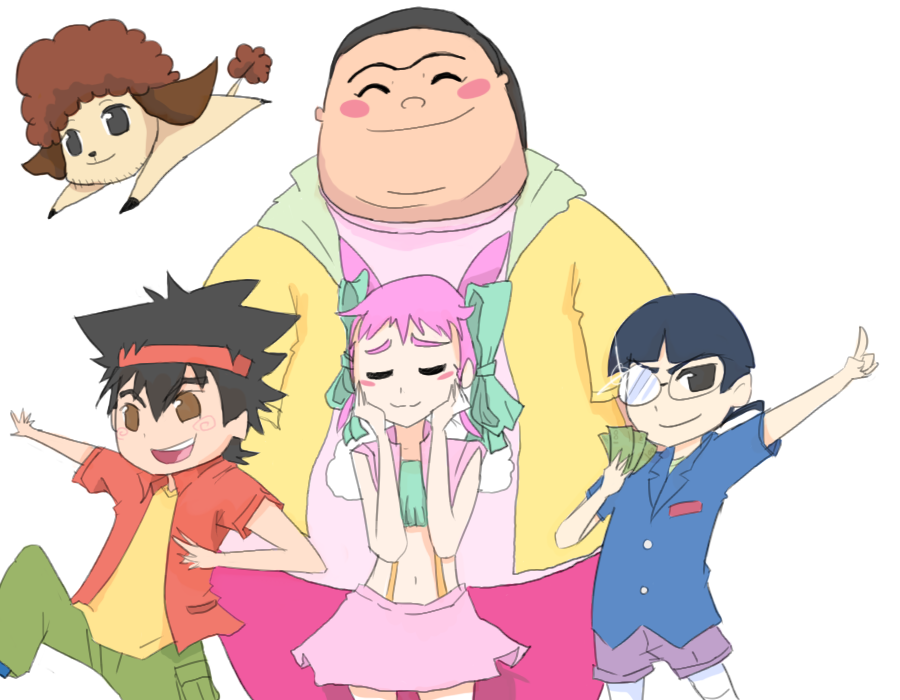
Koni (whose character is based on the famous Sumo-wrestler) and his gang have lots of crazy and incoherent adventures in their town. From fighting with their "Lovely-Teacher" and dealing with Samurai fish, to confirming if "The Armored-Guy's" wife has an affair and saving the world, Koni, High, Moro, Nari and Afro, the Afro-dog, do the craziest and funniest things to have fun.

Dotto! Koni-chan is a Japanese anime television series, which premiered in Japan on Animax between November 26, 2000 and May 29, 2001. It was animated by Shaft and produced by Animax and Genco. It had a wide fan base in Latin America, especially in México, Chile, Colombia and Argentina.

Patrick Star Cartoon Movie on SpongeBob Animation


Patrick Star is a cartoon character SpongeBob SquarePants movie. He is a starfish that live in the stone. She lives in Bikini Bottom, SpongeBob neighbor, good friend, and Squidward, who does not like it. He is the dumbest creature in Bikini Bottom as they often do things that are stupid and ridiculous. Along with SpongeBob, Squidward bother him every day.

Patrick is somewhat jealous of SpongeBob's various awards and once tried to imitate everything he did hoping to get awards for it. Finally, he got an award for doing nothing longer than anyone else, which he was pleased with. Later, we find out Patrick won the Dirty Bubble Challenge many years ago and then he lost the trophy they sent him in " Have You Seen This Snail? ", which also reveals one of his talents, being good at paddleball.

Patrick Star, like his pal SpongeBob is a big fan of Mermaid Man and Barnacle Boy . He also likes a lot of food (especially ice cream and cheese , which probably contributes to him being overweight), and riding on fishing hooks. When writing a movie script, he suggested the characters should drink "Cheese Coffee", and he requested that his room at the Krusty Towers be filled with cheese. In an older episode entitled " Hooky ", he risked his life for cheese. Arguably, one of the most difficult experiences of Patrick's life was when he had to open a jar in order to copy SpongeBob. He overcame his immense stupidity and was able to pull it off with flying colors thanks to SpongeBob's instructions and Patrick's perseverance. Unfortunately, after his success at jar-opening, he "spiked" the glass jar through the floor in jubilation.

Squidward Cartoon Series on SpongeBob's


Squidward Tentacles is the cartoon character SpongeBob SquarePants movie. He is an octopus who lived in the house-shaped statues. He was next door to SpongeBob and Patrick Star, but he does not like to have neighbors like them because it is often disturbed in the day relaxed. He also worked at the Krusty Krab restaurant as a cashier, together with Sponge Bob. Usually it does not work very seriously, and is the opposite of Sponge Bob.

This character disuarai by Rodger Bumpass. Although his name is Squidward (squid in the English language meaning the squid), he is an octopus. This is stated on the show "behind the scenes" for 20 minutes on The SpongeBob SquarePants Movie DVD with this film's creator Stephen Hillenburg and some other voice. One reason for this is to draw 6 feet to these characters much easier than having to draw 8 feet.

Squidward is a portmanteau name of the squid and the name of Edward (Squilliam, enemies also have the same combination of squid and William). In this case, one actor said that Squidward name better than Octoward.

The Little Mermaid Disney Cartoon Animated Design


The Little Mermaid Disney Cartoon Animated Design
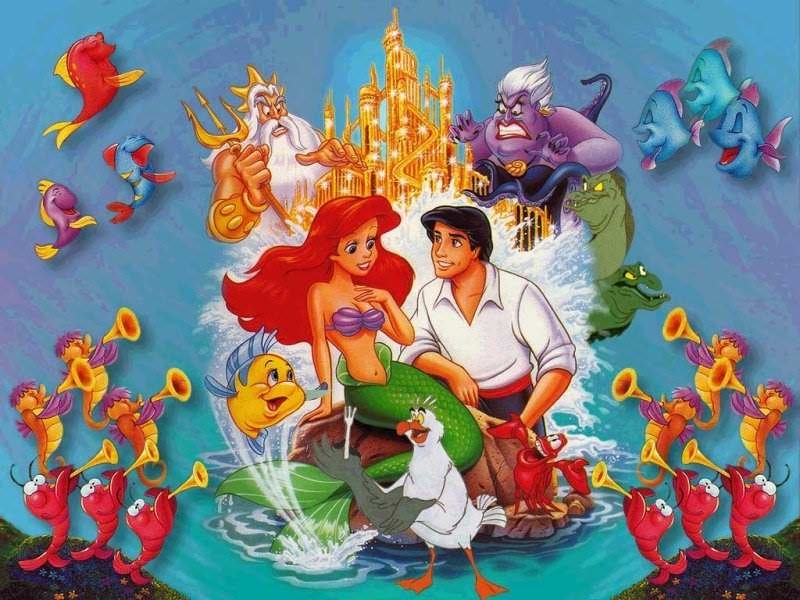
The Little Mermaid is a 1989 American animated film produced by Walt Disney Feature Animation and based on the Hans Christian Andersen fairy tale of the same name. Distributed by Walt Disney Pictures, the film was originally released to theaters on November 17, 1989 and is the twenty-eighth film in the Walt Disney Animated Classics series, and the first of the Disney Renaissance.

After the success of the 1988 Disney/Amblin film Who Framed Roger Rabbit, The Little Mermaid is given credit for breathing life back into the animated feature film genre after a string of critical or commercial failures that dated back to the early 1980s. It also marked the start of the era known as the Disney Renaissance. A stage adaptation of the film with a book by Doug Wright and additional songs by Alan Menken and new lyricist Glenn Slater opened in Denver in July 2007 and began performances on Broadway.

Triton appears and confronts Ursula, but cannot destroy Ursula's contract with Ariel. Triton chooses to sacrifice himself for his daughter, and is transformed into a polyp. Ursula takes Triton's crown and trident, which was her plan from the beginning. Ursula uses her new power to gloat, transforming into a giant, and forming a whirlpool that disturbs several shipwrecks to the surface, one of which Eric commandeers. Just as Ursula is set to use the trident to destroy Ariel, Eric turns the wheel hard to port and runs Ursula through the abdomen with the ship's splintered bowsprit, mortally wounding her. With her last breaths, Ursula pulls the ship down with her, but Eric escapes to shore in time.

With Ursula gone, her power breaks and the polyps in Ursula's garden (including Triton) turn back into the old merpeople. Later, after seeing that Ariel really loves Eric and that Eric also saved him in the process, Triton willingly changes her from a mermaid into a human using his trident. She runs into Eric's arms, and the two finally kiss. In the final scene, an unspecified amount of time later, Ariel marries Eric in a wedding where both humans and merpeople attend.